May 26: a market index, a gusher, a beating, and a $69 billion bet
Four May 26 decisions across 126 years — Charles Dow's 1896 price-weighted index of 12 stocks at 40.94, now the world's most-cited market benchmark; George Bernard Reynolds's 1908 decision to ignore an abort order in Persia and strike the Middle East's first commercial oil well; Ford's 1937 Battle of the Overpass, where one photographer's hidden glass plates outperformed a 3,000-person private security force; and Broadcom's 2022 $69 billion VMware acquisition, whose financial success and customer-loyalty damage are both measurable — and not contradictory.
Four decisions on this date across 126 years — a journalist who invented the benchmark that still opens every financial newscast; an engineer who ignored his abort order; a car company that sent thugs to meet cameras; and a semiconductor firm that turned enterprise software's biggest brand into its most polarizing name.
1896 — Charles Dow invents the market's weather vane
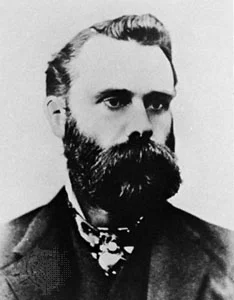
On May 26, 1896, a 44-year-old financial journalist published a two-page newsletter called the Customer's Afternoon Letter 1 containing a single line of arithmetic: add the prices of 12 industrial stocks, divide by 12, arrive at 40.94 2. Charles Henry Dow (co-founder of Dow Jones & Company and the first editor of The Wall Street Journal, which he launched in 1889) had no algorithmic back-test and no exchange endorsement 3. His stated goal was not market prediction but market transparency — a "window," as the Library of Congress later characterized it, into overall economic direction for readers who couldn't afford a broker 1.
None of the original 12 companies — American Cotton Oil, American Tobacco, Chicago Gas, and nine others — survive in the index today 2. General Electric, the longest-running original member, was removed in June 2018 after 122 years 2. The divisor that was simply "12" in 1896 had shrunk to 0.1624 by late 2025, reflecting 59 membership changes and countless stock splits 2. From 40.94, the index reached 42,544 at year-end 2024 — a compound growth story that spans the Gilded Age, two world wars, the internet, and a global pandemic 2. From 1980 through 2023, the DJIA's annualized return was 8.90%; the S&P 500's was 8.91% 2 — virtually indistinguishable despite the DJIA's price-weighting and its 30-stock roster that professional analysts widely regard as too narrow 5.
Mirror: Dow built a rough instrument with conscious simplicity — "a paper of news and not a paper of opinions," he wrote in the WSJ's first issue 3. Its durability doesn't come from methodological elegance; it comes from arriving first and establishing a common reference point before anyone thought to argue about it. The lesson for anyone designing metrics, standards, or platforms: the instrument that gets adopted shapes the conversation, regardless of whether it is the most rigorous one available.
1908 — The engineer who didn't open the telegram in time
At 4:00 AM on May 26, 1908, George Bernard Reynolds sent a terse telegram from the remote southwestern Persian plateau of Masjed Soleyman: "I have the honour to report, that this morning at 4 a.m. oil was struck in the No.1 hole at a depth of 1180 feet." 6 A column of crude oil shot 50 to 80 feet above the drilling platform 7. This was the first commercially significant oil discovery in the Middle East 8.
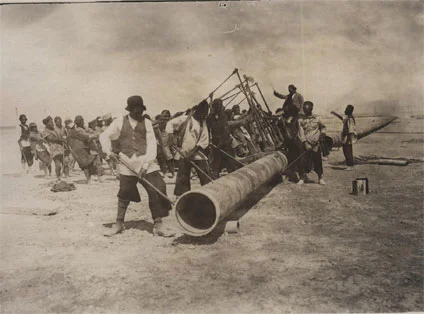
The backstory is a case study in perseverance and institutional dysfunction. William Knox D'Arcy, an Australian gold-mining millionaire who never visited Persia, had paid £20,000 cash and £20,000 in company shares for a 60-year exploration concession from the Qajar Shah in 1901 9. By early 1908, D'Arcy and his backers at Burmah Oil had spent over £500,000 with nothing commercial to show 7. In May 1908, the Glasgow board cabled Reynolds the order to stop drilling at 1,600 feet, dismiss the crew, and ship the equipment to Burma 6. Reynolds was at 1,180 feet. He delayed acting on the order. The well came in before it reached him.
When D'Arcy received the news in London, he reportedly said: "If this is true, all our troubles are over." 10 The Anglo-Persian Oil Company was incorporated in 1909, its IPO sold out in 30 minutes 8. In 1914, Winston Churchill — then First Lord of the Admiralty, converting the Royal Navy from coal to oil — secured a 51% government stake for £2.2 million in exchange for a 20-year fuel supply contract 8. That company became British Petroleum, later BP — which by 2010 had spilled nearly 4.9 million barrels into the Gulf of Mexico 11 and by 2025 had abandoned its 2020 net-zero pledge, describing the prior strategy as "misplaced" 12.
Mirror: Reynolds ignored a direct shutdown order and found oil 420 feet before the cutoff point — and received a £1,000 severance bonus when he was fired by APOC's new management in 1911, less than his annual salary of £1,500 when D'Arcy first hired him 7. As Arnold Wilson, who was on-site that morning, later wrote: "The service rendered by G.B. Reynolds to the British empire and to British industry and to Persia was never recognized." 8 The people at the receiving end of Reynolds's patience became very wealthy. Reynolds retired to Venezuela and found another major field in 1922 6. Before extending a stop-work order, it is worth asking who is closer to the evidence.
1937 — Ford sends men, a photographer saves the film
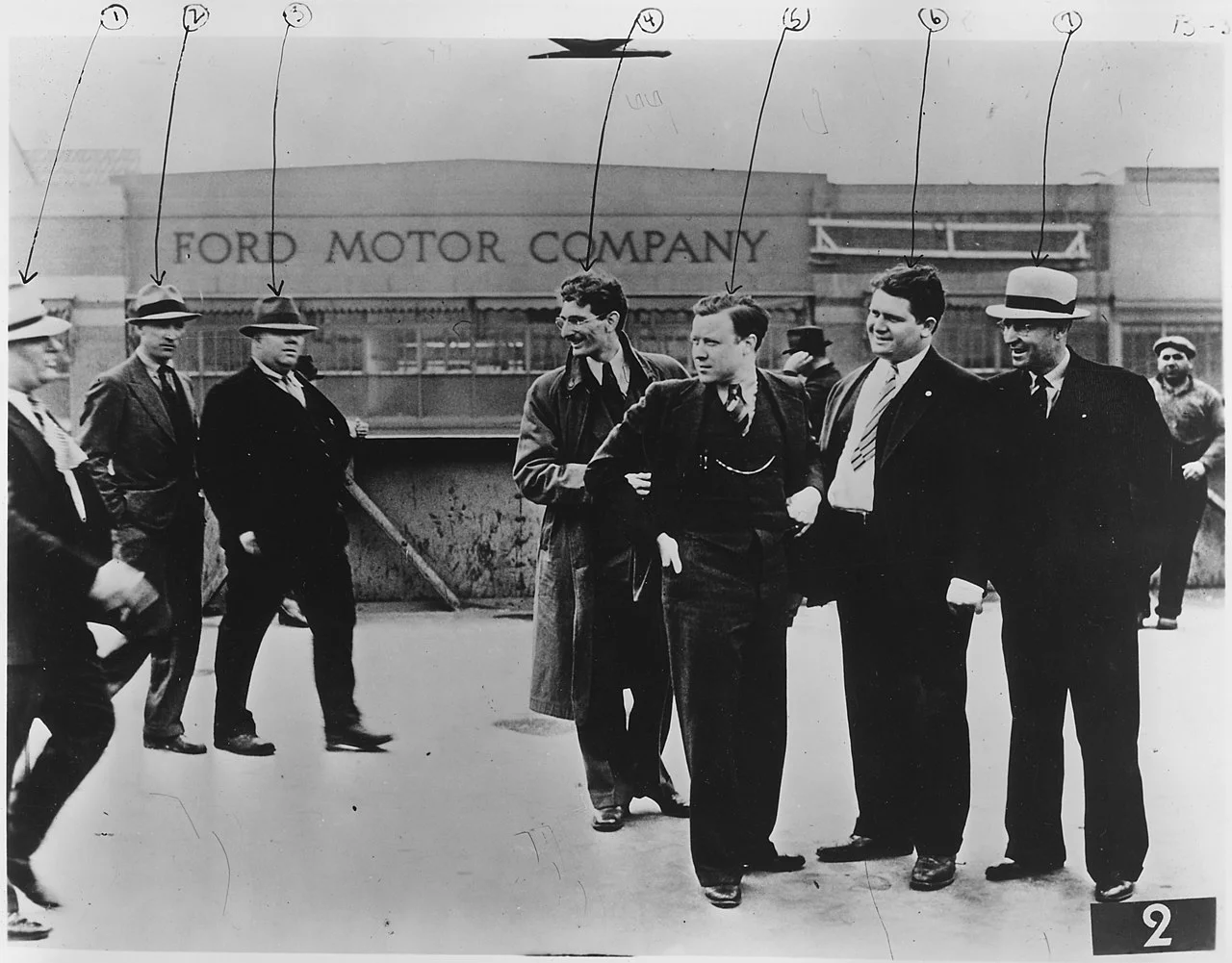
At approximately 2:00 PM on May 26, 1937, UAW Local 174 organizers — including Walter Reuther and Richard Frankensteen — climbed the Miller Road pedestrian overpass at Ford's River Rouge complex in Dearborn, Michigan, with a municipal permit to distribute leaflets reading "Unionism, Not Fordism" 13. Ford's head of security Harry Bennett had assembled roughly 35 to 40 members of the Ford Service Department — a force the New York Times would describe as "the largest private quasi-military organization in existence" 14 — and deployed them to the overpass.
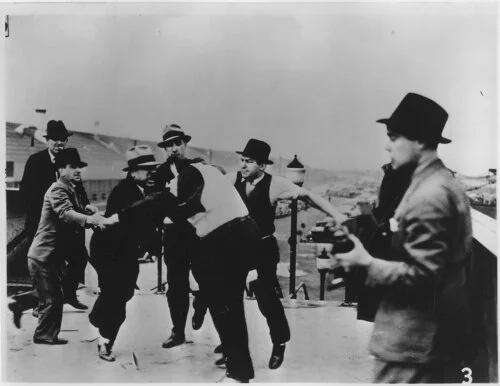
What happened next was documented by Detroit News photographer James "Scotty" Kilpatrick, who had positioned himself on the bridge. Bennett's men attacked: Frankensteen's coat was pulled over his head so he couldn't defend himself; Reuther was lifted off the concrete and slammed back down seven times before being thrown down a flight of stairs 15. Sixteen people were injured; one, J.J. Kennedy, died four months later from injuries attributed to the beating 13. Kilpatrick hid his glass plates under the back seat of his car. When Bennett's men caught up with him, he surrendered the empty unexposed plates on the front seat. They smashed them on the road. His actual photographs ran in newspapers across the country within 48 hours 16.
The NLRB held hearings in July 1937 and found Ford had systematically violated the 1935 National Labor Relations Act (Wagner Act), describing the River Rouge plant as having "many of the characteristics of a community under martial law" 13. Ford was the last of Detroit's three major automakers to sign a union contract — doing so in June 1941, four years after GM and Chrysler — and when he did, the terms were more generous than either: back pay for over 4,000 wrongly dismissed workers, the industry's highest wage rate, and a closed shop 17. Henry Ford's explanation for his change of heart: "Don't ever discredit the power of a woman" — his wife Clara had threatened to leave him if the violence continued 14. Reuther went on to lead the UAW from 1946 until his death in a 1970 plane crash, expanding membership past 1.5 million and co-architecting the 1948 Treaty of Detroit — the first U.S. labor contract to tie wages to both productivity and the cost of living 18.
Mirror: Ford spent years and millions maintaining a 3,000-person private security force and 9,000 paid informants to hold off a legally protected right to organize 14. When he finally signed, he gave more than GM and Chrysler — the companies he had been watching to set his floor. Delayed negotiation rarely improves the terms. And the overpass photographs, not the beatings, determined the outcome: one camera outperformed a private army.
2022 — Broadcom bets $69 billion on an aging playbook
On May 26, 2022, Broadcom Inc. — a semiconductor company whose CEO Hock Tan had previously absorbed CA Technologies ($18.9 billion, 2018) and Symantec's enterprise security business ($10.7 billion, 2019) — announced an agreement to acquire VMware (the dominant enterprise virtualization platform, founded 1998) for approximately $61 billion in cash and stock, plus an assumption of $8 billion in VMware net debt, bringing the total enterprise value to roughly $69 billion 19. VMware shareholders could elect $142.50 in cash or 0.2520 Broadcom shares per VMware share — a 44% premium to the last undisturbed trading day 19. Michael Dell, who held 40.2% of VMware shares, signed a support agreement 20.
The deal took 18 months to close. China's SAMR granted the final regulatory clearance on November 21, 2023 — the day after the Biden-Xi APEC summit in San Francisco — with a condition requiring VMware software to remain compatible with third-party hardware 21 22. Within six weeks of closing, Broadcom had eliminated roughly 2,837 VMware positions 23, discontinued all perpetual licenses, collapsed approximately 8,000 SKUs into two bundled products, and sent renewal bills that customers reported as 2× to 12× their prior contracts 24. AT&T, which ran 75,000 virtual machines across 8,600 servers on VMware, sued in August 2024, claiming a 1,050% cost increase; the parties settled in November 2024 25.
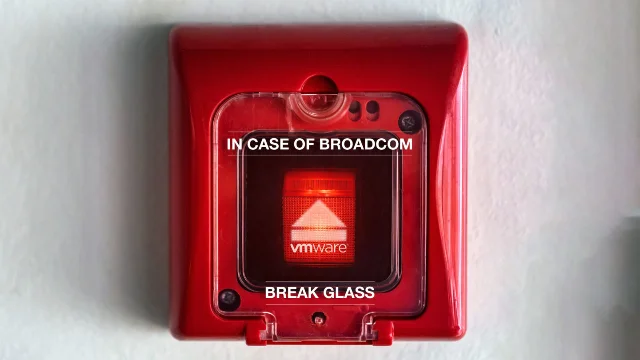
Financially, the playbook is working. Broadcom's infrastructure software division — anchored by VMware — posted $27 billion in revenue in FY2025, up 26% year over year, at an operating margin of 77%, versus 13–22% when VMware was independent 26. Broadcom's total FY2025 revenue reached $63.9 billion, and its market capitalization crossed $2 trillion in April 2026 27. More than 90% of VMware's top 10,000 customers by spend have migrated to the new bundled platform 26. The longer-term picture is less settled: Gartner forecasts VMware's hypervisor market share will fall from 70% in 2024 to 40% by 2029 as customers evaluate Nutanix, Proxmox, and public cloud migration paths 25. In March 2026, cloud infrastructure provider group CISPE filed a formal complaint with the European Commission alleging prices had risen up to tenfold and contracts had been terminated unilaterally 27.
Mirror: Broadcom's strategy has two distinct phases: a financial phase (completed, metrics clean) and a customer-loyalty phase (in progress, metrics contested). The operating margin jump from sub-22% to 77% is real. So is Gartner's prediction of a 30-point market share loss over five years. These are not contradictory — they describe the same phenomenon at different time horizons. What Hock Tan has demonstrated is that enterprise software lock-in is durable enough to survive aggressive price increases for the largest customers. What the AT&T lawsuit and CISPE complaint suggest is that the political and reputational cost of that extraction has not yet been fully priced in. The 1937 Ford parallel is not the violence — it is the sequence: the delay increased the final cost, and the documentation outlasted the event.
Cover image: Walter Reuther (fifth from left) and Richard Frankensteen (sixth from left) on the Miller Road overpass moments before the attack, May 26, 1937. Photo: NARA, public domain.
参考来源
- 1Library of Congress: DJIA First Published
- 2Wikipedia: Dow Jones Industrial Average
- 3Encyclopaedia Britannica: Charles Henry Dow
- 4Wikipedia: Charles Dow
- 5Chase/J.P. Morgan: S&P 500 vs. Dow
- 6GeoExpro: The Centenary of the First Oil Well in the Middle East
- 7AAPG Explorer: The First Oil Field in the Middle East
- 8Wikipedia: Anglo-Persian Oil Company
- 9Encyclopaedia Britannica: William Knox D'Arcy
- 10WIRED: May 26, 1908: Mideast Oil Discovered
- 11BP: Our History
- 12The Guardian: Why has BP pulled the plug on its green ambitions?
- 13Wikipedia: Battle of the Overpass
- 14Encyclopedia.com: Battle of the Overpass
- 15Walter P. Reuther Library: Battle of the Overpass
- 16Smithsonian Magazine: How the Ford Motor Company Won a Battle and Lost Ground
- 17History.com: Ford signs first contract with autoworkers' union
- 18AFL-CIO: Walter Reuther
- 19Broadcom/PRNewswire: Broadcom to Acquire VMware
- 20CNBC: Broadcom announces plans to buy VMware
- 21The Register: China relents — Broadcom-VMware merger approved
- 22BBC News: Chipmaker Broadcom completes $69bn deal to buy VMware
- 23Ars Technica: Broadcom cuts at least 2,800 VMware jobs
- 24CIO Dive: VMware's first contentious year under Broadcom
- 25Ars Technica: A year after Broadcom's VMware buy
- 26Network World: Broadcom's VMware strategy pays off financially
- 27Wikipedia: Broadcom Inc.
围绕这条内容继续补充观点或上下文。